Tiered Link Building With GSA SER
Understanding Tiered Link Building with GSA SER
Tiered link building is a powerful search engine optimization strategy designed to amplify the authority of your main website without directly risking its reputation. At its core, it involves creating layers of backlinks. Your money site sits at the top, supported by a first tier of high-quality, contextual links. These Tier 1 links are then strengthened by a second tier of more voluminous, automated links, which may themselves be backed by a third tier of pure quantity. This structure filters link juice upward, pouring authority into your primary domain while insulating it from the lower-quality footprints of mass automation.
GSA Search Engine Ranker (GSA SER) is the engine that makes aggressive tiered campaigns possible at scale. Instead of manually building every second- and third-tier link, GSA SER automates the submission to thousands of platforms—from social bookmarks and forum profiles to article directories and Web 2.0 blogs. When configured correctly, tiered link building with GSA SER becomes a self-sustaining ecosystem that continuously indexes and powers your upper-tier assets.
Why a Tiered Structure Matters for SEO
Search engines evaluate both the quality and the trustworthiness of every link pointing to your site. The direct approach of blasting thousands of automated links straight to a money site is a legacy tactic that modern algorithms easily detect and penalize. A tiered architecture solves this problem by introducing a buffer zone. Consider these critical benefits:
- Risk Mitigation: Low-quality links never touch your money site. Any algorithmic devaluation affects only the lower tiers, while Tier 1 properties remain carefully curated.
- Amplified Indexing: Tier 2 links force search engines to crawl your Tier 1 articles and profiles more frequently, increasing the speed at which those powerful contextual links are discovered and counted.
- Controlled Link Equity Flow: You can pump massive amounts of link equity into a Web 2.0 property, and then funnel a filtered, concentrated stream of authority to your target page through a single, well-placed contextual link.
- Diverse Link Profiles: GSA SER can mix platforms, anchor texts, and languages, creating a chaotic, natural-looking footprint that obscures the automated nature of the campaign.
Building the Three-Tier Pyramid with GSA SER
A successful tiered link building campaign with GSA SER requires a clear blueprint. The pyramid metaphor is perfect: a wide, deep base supporting a narrow, high-quality peak. Here’s how to construct each level methodically.
Tier 1: The Hand-Crafted Foundation
Your first tier is the only layer that links directly to your money site. Never automate Tier 1 with GSA SER. Instead, manually create or purchase high-quality assets such as:
- Niche-relevant guest posts on real blogs
- Web 2.0 properties on platforms like WordPress, Blogger, and Tumblr, each populated with unique, readable articles
- Branded social profiles on high-authority networks
- Niche edits (insertions of your link into existing, aged pages)
Each Tier 1 asset should contain just one or two links to your money page, using highly relevant, branded or URL anchor text. The content must be original, engaging, and thematically consistent. This layer is your shield and your conduit; it must appear completely organic to any manual reviewer.
Tier 2: The Automated Engine Room
This is where tiered link building with GSA SER truly shines. You point GSA SER at your Tier 1 properties, not your money site. The goal is to create thousands of links that inject authority into those Web 2.0 articles and guest posts. Follow these configuration principles for maximum safety and effect:
- Curate Your Target Platform List: Disable platforms that create heavily spammed footprints. Focus on contextual and semi-contextual engines like article directories, social bookmarks, Web 2.0 comment sections, and document-sharing sites. Avoid massive forum profile blasts, which hold little weight today.
- Use Verified and High-PR Domains: Configure GSA SER to prioritize platforms with measurable Page Authority or Domain Rating. Filter out domains with thin content or those already flagged.
- Content is Still King: Don’t rely on GSA SER’s fully scrambled output. Feed the tool spun content that is highly readable at the sentence and paragraph level. Invest in quality spintax that produces unique, coherent, and grammatically sound articles of at least 300 words for Tier 2.
- Anchor Text Diversity: Pointing to Tier 1, diversify heavily. Your Tier 2 anchors should include generic terms (click here, learn more, website), naked URLs, long-tail variations, and brand names. Never use exact-match money anchors in bulk.
- Link Velocity and Timing: Avoid a sudden spike. Use GSA SER’s scheduling features to drip-feed links over days or weeks, simulating gradual natural growth.
here
Tier 3: The Indexing and Quantify Layer
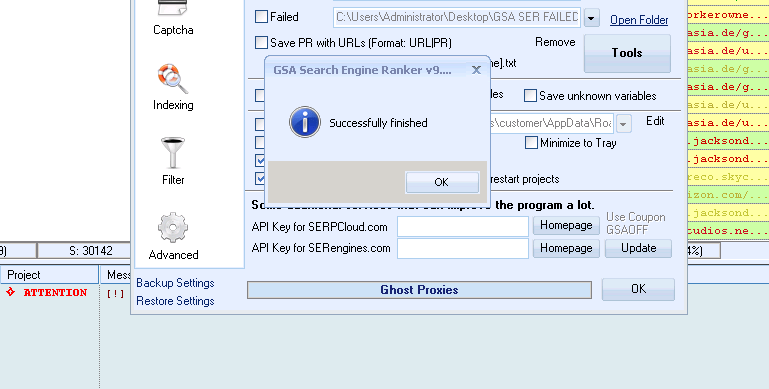
A third tier is optional but often necessary to force indexing of the countless Tier 2 links that might otherwise remain orphaned. Tier 3 is a pure volume play, and you can loosen restrictions significantly.
In GSA SER, configure a Tier 3 campaign that points at the verified links of your Tier 2 campaign. This means importing the backlinks your Tier 2 campaign has successfully created and using them as the target URLs. Tier 3 settings can be more aggressive: using heavily spun comments, auto-generated profiles, and pinging services. The sole purpose is to get crawlers to the Tier 2 links. No content quality is needed here; the volume ensures that enough bots pass through to discover and index your Tier 2 assets, which in turn power Tier 1.
Essential Tools and Setup for GSA SER
Effective tiered link building with GSA SER depends less on the software itself and more on the auxiliary tools that supply it with data. A bare installation will fail. You must equip GSA SER with the following:
- Captcha Solver: Integrate a service like Xevil, CapMonster, or 2Captcha. Without this, your success rate will be near zero.
- Proxies: Dedicated private proxies or semi-dedicated proxies are mandatory. Free public proxies are dead and will get your IP flagged instantly. Use a pool of at least 10–20 proxies to distribute the load.
- Indexing Service or Tools: Use a bulk indexer that submits your Tier 2 and Tier 3 links to indexing services. GSA SER has a built-in indexer module, but external tools can speed up discovery.
- Article Spinner: A high-quality content spinner like Spin Rewriter or WordAi is crucial for Tier 2 unique content. For Tier 3, basic auto-spin may suffice.
- Email Accounts: GSA SER needs throwaway email accounts to register on platforms. Use catch-all domains or buy bulk POP3 accounts. Never use personal or critical email addresses.
Always run the software on a dedicated VPS or machine that can be left running 24/7. GSA SER is a marathon, not a sprint. Consistent, steady link velocity over months produces far better results than a one-week blitz that leaves a footprint.
Common Pitfalls and How to Avoid Them
The difference between a ranking boost and a digital disaster often comes down to discipline. When executing tiered link building with GSA SER, watch for these frequent mistakes:
- Linking spam directly to the money site: This defeats the entire purpose of the tiered model. Keep your money site URLs out of GSA SER entirely.
- Neglecting Tier 1 quality: A powerful GSA SER engine pushing juice to a thin or plagiarized Web 2.0 yields nothing. The Tier 1 property must be strong enough to carry the authority being sent its way.
- Identical anchor text across all tiers: This is a blatant manipulation signal. Force GSA SER to use a wide blend, and never let exact-match exceed 1–2% of your total Tier 2 or Tier 3 profiles.
- Failure to filter and prune: Let your Tier 2 campaign run, then export verified links and sort them by domain authority. Delete or disavow any toxic, penalized, or irrelevant domains that slipped through. Use the “Verify and Prune†routine regularly.
- Impatience: The indexation chain takes time. A link built today in Tier 3 may take weeks to be crawled, pass authority to Tier 2, and then reflect on Tier 1 metrics. Wait at least 4–8 weeks before judging a campaign’s impact.
FAQs About Tiered Link Building with GSA SER
Is tiered link building with GSA SER safe in the latest Google updates?
Yes, when done correctly with a strict buffer approach. Google’s algorithms are designed to detect patterns of direct manipulation. By never pointing automated links at your money site and keeping Tier 1 meticulously clean, you align with the principle of second-degree linking, which is enormously difficult for algorithms to penalize without also catching legitimate viral content. The risk is concentrated in the lower tiers, and even if they are deindexed, your money site remains untarnished.
How many links per day should I build to a Tier 1 property?
There is no universal number, as it depends on the domain age and existing link velocity of your Tier 1 property. A brand-new Web 2.0 cannot absorb 500 links a day without looking artificial. Start slow: 5–10 verified links per day initially, slowly scaling up to 50–100 over several months. GSA SER allows you to set daily limits per project, so use that feature. For a hardened, aged article page, you can be more aggressive but should still keep the daily count within a reasonable human scale.
Can I use GSA SER for Tier 1 links if I have strong filters?
Technically yes, but it is strongly discouraged. Even with the most stringent filters, you will still be placing automated links on platforms that Google may not value highly. The risk of a Tier 1 link being flagged as spam and passing a negative signal directly to your money site is too high. The industry best practice is to manually build or buy high-quality outreach links for Tier 1, and reserve GSA SER exclusively for Tier 2 and Tier 3 support roles.
What kind of content works best for Tier 2 submissions?
Use multi-sentence spintax that reads like a natural, informative article excerpt. A 300–500 word article with spinning at the word level (synonyms), sentence level, and paragraph level works best. The content should be relevant to the Tier 1 topic but does not need to be expert-level. This provides context to the link, making the backlink appear editorial and earned, which GSA SER’s contextual engines favor over bare profile links.
How do I track the success of a tiered link campaign?
Do not track Tier 2 and Tier 3 links by monitoring your money site’s rankings daily—that path lies madness and impatience. Instead, track the indexation rate of your Tier 1 properties, their own organic traffic, and their Domain Rating (DR) or Page Authority (PA) growth. When a Tier 1 Web 2.0 blog post starts ranking for medium-competition keywords, you know the lower tiers are working. Ultimately, improvements in your money site’s rankings for target keywords will follow, but they are the lagging indicator, not the leading one.
Keeping the Pyramid Balanced for Long-Term Growth
Many practitioners over-invest in the engine room and forget that a pyramid is only as strong as its apex. Regularly audit your Tier 1 assets. If a Web 2.0 gets deleted or a guest post link breaks, replace it immediately. Then reroute your Tier 2 GSA SER campaign to power the replacement. Maintain a ratio where your Tier 1 consists of a manageable set of 10–30 powerful properties, each supported by hundreds of Tier 2 links and thousands of Tier 3 links. This diversification ensures that no single point of failure can undermine your entire structure. Tiered link building with GSA SER is not a one-off tactic; it is an ongoing process of feeding, pruning, and scaling an invisible authority network that pushes your site higher while keeping penalties at a safe distance.